What Is “Chicken Wings” in Spanish? Correct Terms Explained
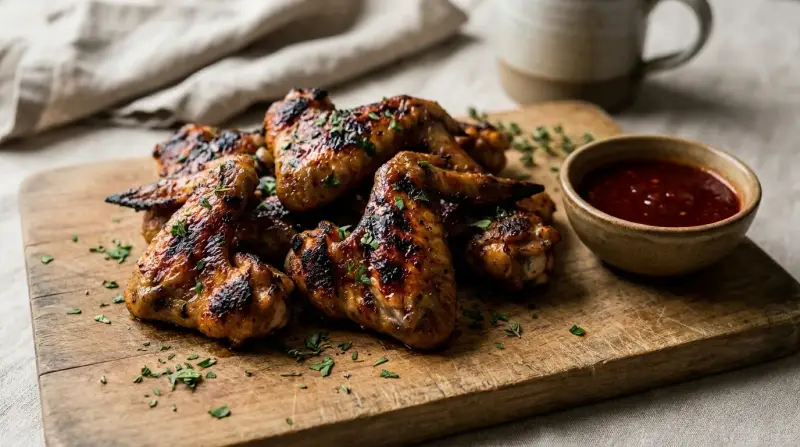
In Spanish, chicken wings are called “alas de pollo” or the more colloquial “alitas de pollo,” both meaning the wing portion of a chicken; the plural forms are used in menus, recipes, and everyday conversation.
Understanding the Basic Terms
Spanish distinguishes between the formal noun ala de pollo and its diminutive form alita de pollo. Ala translates directly as “wing,” while the suffix -ita adds a sense of smallness or affection, often used when the wings are served as snacks or appetizers. Both terms are grammatically feminine, so they pair with the article la and the plural las. Menus in formal settings may prefer alas de pollo, whereas sports bars and street vendors frequently use alitas de pollo to suggest a bite‑sized, flavorful portion.
Knowing the nuance helps you read recipes accurately. For example, the article Are Chicken Wings Considered White Meat? The Full Explanation discusses how the anatomy of a wing influences cooking methods, which is useful when you see the term ala in a technical recipe.
Step‑by‑Step Translation Guide
- Identify the context. Determine whether the wing is being referenced as a main dish (formal) or as a snack/appetizer (casual). Formal contexts usually call for alas de pollo; casual contexts favor alitas de pollo.
- Match singular or plural. Use ala or alita for a single wing, and alas or alitas for multiple. Incorrectly mixing singular with plural articles (e.g., “la alitas”) is a common error.
- Check regional variations. In Mexico, alitas is dominant, while in Spain you may encounter alas more often. Adjust your vocabulary if you are reading a recipe from a specific country.
- Read accompanying adjectives. Descriptors such as crujientes (crispy) or marinadas (marinated) follow the noun: “alas de pollo crujientes.” This order mirrors English adjective placement after the noun.
- Confirm cooking method terminology. Words like a la parrilla (grilled) or al horno (baked) indicate how the wings are prepared. Pair the correct term with the method for clear instructions.
- Reference a reliable recipe. For a practical example, see Grilled Chicken Wings: Crispy Wings with Baking Powder Rub, which uses “alitas de pollo” throughout the instructions.
- Double‑check for gender agreement. Since both nouns are feminine, any adjectives must match: alitas picantes, not alitos picantes.
Applying the Terms in Recipes
When you translate a recipe, replace English “chicken wings” with the appropriate Spanish term based on the dish’s style. A grill‑heavy recipe that serves a crowd will read better with alas de pollo a la parrilla. A snack‑size order for game night should use alitas de pollo al horno or alitas de pollo fritas, depending on the cooking method.
Remember the safe internal temperature for poultry: cook to at least 165 °F (74 °C). Include this detail in Spanish as “cocinar hasta 165 °F (74 °C)”. If a recipe calls for a sauce, translate ingredients clearly—use jugo de manzana instead of wine for halal compliance.
For nutritional context, the article Why Are Chicken Wings So High in Calories? Explained breaks down why wings are calorie‑dense, a point that can be added to Spanish recipe notes as “alto contenido calórico”.
Printable Recipe Card
A printable recipe card for “Grilled Chicken Wings: Crispy Wings with Baking Powder Rub” is just below the article, ready to download or print.
Common mistakes
Using the wrong article
Writing “la alitas” mixes a singular article with a plural noun, producing “la alitas de pollo.” This error makes the phrase grammatically incorrect and can confuse readers. Always match singular with la and plural with las.
Confusing “pierna” with wing
Some beginners translate “chicken wing” as pierna de pollo, which actually means “chicken leg.” This mistake leads to completely different cuts of meat and cooking times. Verify the word “wing” specifically appears as ala or alita.
Ignoring regional preferences
Choosing “ala de pollo” in a Mexican street‑food blog can sound stiff, while “alitas de pollo” in a formal Spanish restaurant menu may seem overly casual. Adjust the term to the regional context to maintain tone.
Missing gender agreement on adjectives
Applying masculine adjectives (e.g., picante vs. picante is neutral, but sabroso vs. sabrosa) to feminine nouns creates discordant phrasing. Ensure adjectives agree in gender and number: “alitas sabrosas,” not “alitas sabrosos.”
Printable recipe card: Grilled Chicken Wings: Crispy Wings with Baking Powder Rub
Save it, print it, or keep it on your phone while you cook.
Loading the recipe card…