How to Declutter Your Closet (And Keep It That Way)
A focused 3-hour method to declutter any closet, plus the small habits that prevent the chaos from coming back.

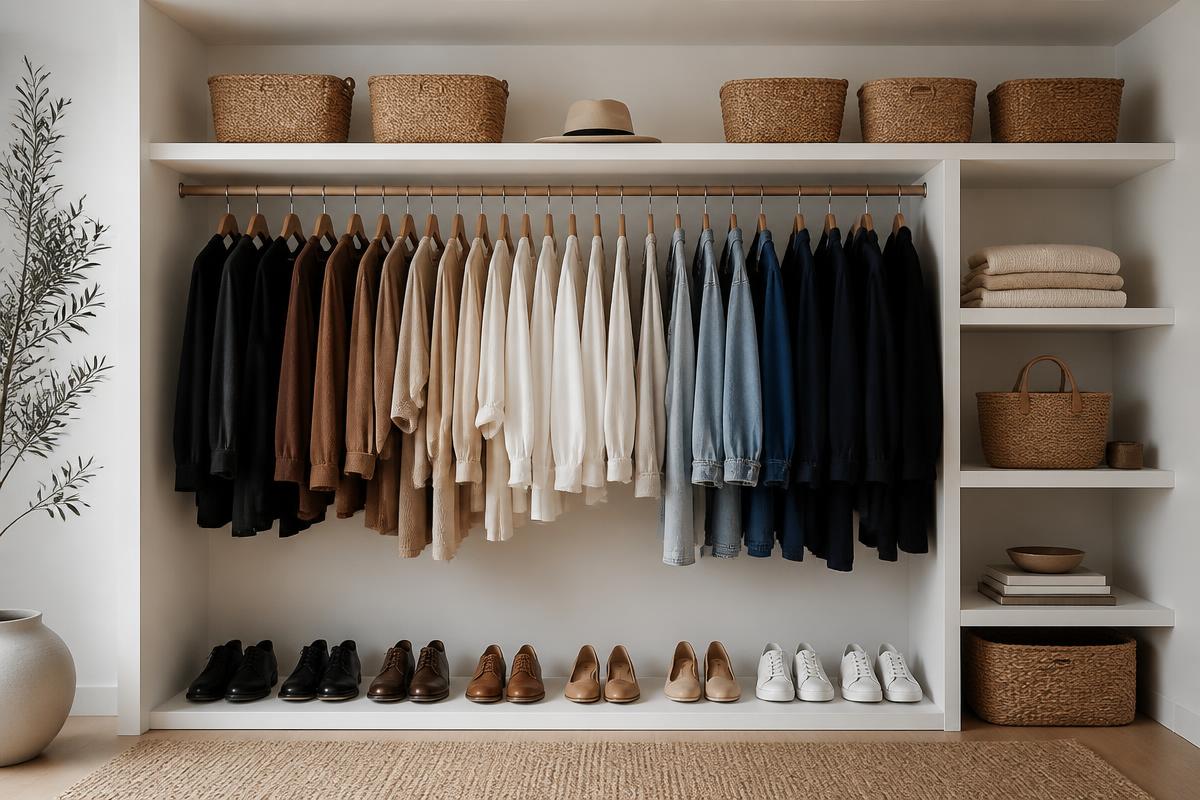
Closet decluttering advice usually fails because it underestimates the emotional load of touching every garment. The method below — adapted from working with several professional organizers — frontloads the easy decisions, batches the hard ones, and finishes the whole closet in one focused afternoon.
Before you start
Block three uninterrupted hours. Set up four bins or piles labeled: Keep, Donate, Repair, Trash. Bring a glass of water and a snack. Choose a time when you are not exhausted — decision fatigue is the real enemy here.
The 3-hour method
- Hour 1 — Empty. Take everything out. Yes, everything. Pile it on the bed. This sounds dramatic but it resets the closet completely and makes the next two hours far easier.
- Hour 2 — Easy yes and easy no. Go through the pile and pull out only the obvious yeses (wear weekly, fits, love it) and obvious nos (haven't worn in two years, doesn't fit, damaged beyond repair). Put each in its bin. Don't agonize.
- Hour 3 — The middle pile. Whatever is left is the hard pile. Try each item on. If you wouldn't buy it again at full price today, it goes to donate.
How to decide what stays
Three simple tests:
- The 12-month rule. Haven't worn it in 12 months across all seasons? It goes.
- The "buy it again" test. Would you buy this today, at full price, in your current life? If no, it goes.
- The wedding rule. Keep one nice outfit you might need for a wedding or funeral. You don't need three.
Maintaining it
- One in, one out. Every new item means an old one leaves.
- The donate bag. A permanent bag in the closet for items you decide to part with. Drop off when full.
- Seasonal swap. Twice a year, rotate off-season items to the back or into storage. This forces a small declutter every six months without it feeling like a project.
Going category by category
Once the closet is empty and you've sorted the obvious yeses and nos, the hardest pile is the middle. Working through it by category — all the t-shirts together, then all the jeans, then all the sweaters — is far easier than trying to evaluate one random item at a time. Comparison is what unlocks decisions: nine plain black t-shirts side by side make it obvious which three are actually the favorites and which six are duplicates that quietly took up space for years.
Pay particular attention to three categories that almost always need pruning: aspirational sizes (clothes you'll wear "when you lose 10 pounds"), sentimental pieces you never actually wear (keep the memory, not the garment — photograph it before donating), and special occasion pieces you bought for a single event years ago. These three categories typically account for half of what stays stuck in closets.
Storage systems after decluttering
Storage decisions become obvious once the closet is at its true volume. Three rules consistently work:
- Same-style, slim velvet hangers throughout. Matching hangers visually quiet the closet and recover 30–40% of rod space compared to mixed plastic and wood hangers. About $40 for 100.
- Drawer dividers and shallow bins on shelves. Stacks of folded clothes collapse within a week; vertical filing (folding clothes into rectangles that stand on edge) holds up indefinitely and lets you see every item at once.
- One bin for "in-between" items. A single bin or basket for items that are not laundry, not folded away, and not actively worn (light layers, a scarf, gym clothes between wears). This bin is where chaos starts; cap it at one and edit weekly.
Handling out-of-season clothes
If your closet feels too small, the actual problem is usually that you are storing twelve months of clothes in a six-month space. Pull off-season items — heavy coats and wool sweaters in spring, swimsuits and shorts in fall — into a labeled bin under the bed, on a high shelf, or in a less-prime closet. This single move typically frees 25–35% of hanging space and reduces visual noise enormously. The fall and spring swap days become natural decluttering checkpoints, because anything you didn't reach for during the season has a low chance of being worn next year either.
Shopping habits that keep the closet manageable
The most effective long-term closet management happens at the point of purchase, not in the closet. Three habits make the biggest difference: a 48-hour rule on any non-essential clothing purchase (the urge passes about 60% of the time), a cost-per-wear estimate before buying (would you wear this at least 30 times? if not, it's a $5/wear item even if it's "only" $150), and a hard one-in-one-out rule for hanging items. The closet stays at a steady volume essentially forever, with no future declutter projects required.
Where to donate what you cut
The decision to let something go gets easier when you know the item will be used. Three donation channels reliably absorb most of what comes out of a closet: local shelters and transitional housing programs take professional clothing for job interviews, coats, and basics in good condition; textile recycling programs (offered by several large retailers) accept stained, torn, or worn-out items that would otherwise go to landfill and turn them into insulation and industrial rags; and consignment or resale apps work well for higher-end pieces that are too good to give away but no longer fit your life. Sort the donate pile into these three streams before you leave the room. The moment something sits in a bag in the trunk for two weeks, half of it ends up back in the closet.
A decluttered closet is not the goal — a closet that quietly supports the way you actually dress is the goal. The three-hour method gets you to the starting line; the small habits afterward are what keep you there. Done once and maintained loosely, this is the last big closet project most people ever need to do.
Above all, be patient with yourself during the middle pile. The reason closets accumulate is rarely poor discipline — it is the steady drift of life through different jobs, sizes, climates, and identities. Letting clothes go is partly logistical and partly an acknowledgment that the version of you who bought them is no longer the version standing in the closet today.
Frequently asked questions
Frequently asked questions
- What if I might need it someday?
- 'Someday' is the enemy of a functional closet. If it doesn't fit your life now and you can imagine replacing it for under $50 if you ever truly need it again, let it go.
- Should I declutter or organize first?
- Always declutter first. Organizing items you don't actually want is wasted effort — and the right storage solution becomes obvious only once you know what is staying.